Category Archives: Plant

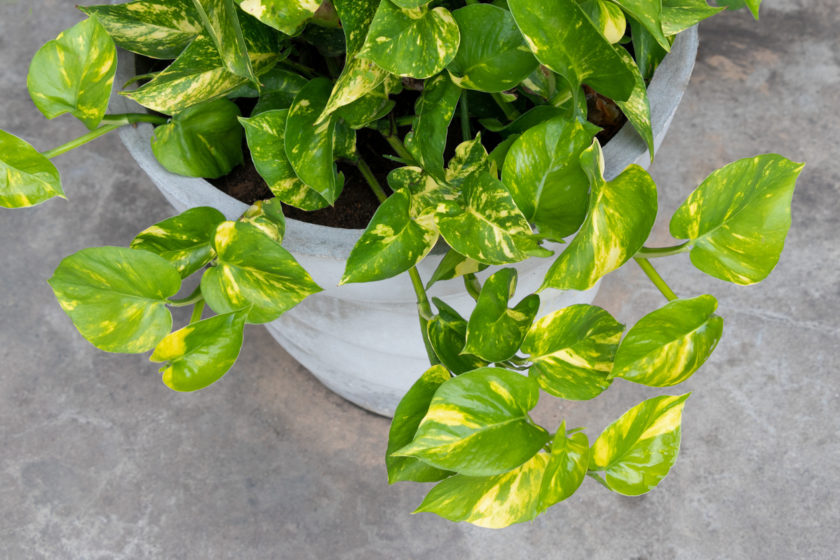
Money plant or devil’s ivy plant growing in pot, top view

Tropical Houseplant Profile: Pothos

When it comes to easy care and low maintenance houseplants, no one can deny that Pothos should be at the top of the list. These lush, trailing specimens can handle most light situations and even thrive in low levels of sunlight, which means they can go just about anywhere! And they’re incredibly low maintenance; just a deep watering after drying out slightly and an all-purpose fertilizer every 4th watering is all they need to thrive. It’s this easy going lifestyle that makes Pothos the perfect gift for anyone on your list, especially if you’re not sure of their home lighting or watering habits!

Pothos have long, trailing tendrils that are covered with lush heart-shaped foliage that is a bit wider than a Philodendron. The most famous variety is the Golden Pothos which features bright green and golden yellow marbled leaves; other varieties come in solid green, bright chartreuse, or green marbled with creamy white. Their trailing habit makes them perfect for hanging baskets, or they can be trained to grow up a trellis and other vertical support (but you’ll have to encourage it to deny the laws of gravity).

Read More

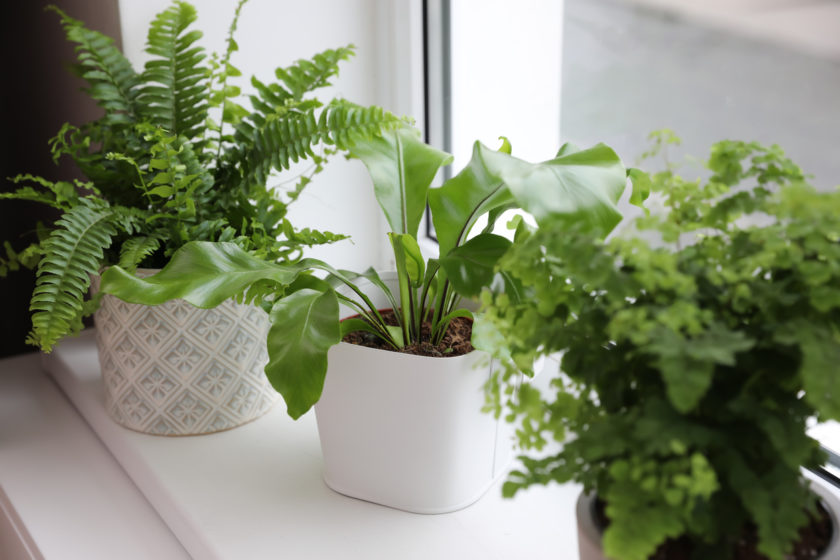
Different beautiful ferns in pots on white window sill

Tropical Houseplant Profile: Tropical Fern Family

If you’ve been looking for a tropical houseplant that has incredible foliage in a wide range of shapes and textures, look no further than the tropical Fern family. This family is HUGE and spans a wide range of environments and habitats; for this blog we’ll focus solely on the indoor varieties and leave the perennial outdoor garden types for another time. But even when we limit ourselves to tropical ferns, there are still way too many varieties to count so let’s get to it!

Some of our Favourite Tropical Fern Varieties:

Asparagus Fern: Technically not a fern! But it’s perfect for adding texture to any space, with its arching fronds of delicate green foliage. Plumosa Fern is even more delicate and airy!

Bird’s Nest Fern: Striking foliage! The wide leaves unfold from its centre like a green rosette! A close relative is the Crispy Wave Fern, which has a little extra ruffle to its fronds.

Boston Fern: This one’s dominated the Top Houseplants lists for decades! The arching, deep green fronds offer a full and lush appearance for that instant “indoor jungle” look. Kimberly Queen looks similar but with a more upright habit, and Fluffy Ruffle is exactly that – fluffy!

Button or Lemon Button Fern: So cute! Their arching fronds are covered with tiny, rounded leaves to add great texture to your collection. Lemon Button foliage has a slight citrusy fragrance.

Blue Star Fern: Delicate and long foliage with a gorgeous blue-green hue! This one’s perfect for adding a bit of colour interest to your fern collection.

Heart Fern: Low growing but still intriguing! The heart-shaped foliage also goes by the name “tongue fern”.

Kangaroo Fern: Perfect for hanging baskets, the name comes from the arching fronds that look like green kangaroo paws!

Maidenhair Fern: So soft! Delicate and airy only begins to describe these arching fronds of rounded, lush green foliage.

Rabbit’s Foot Fern: These get their name not from their fronds but from their roots! The hairy rhizomes pop up and over the pot’s edge for a soft and tactile treat!

Ribbon Fern: These often have a two-toned effect, offering long fingers of silvery leaves edged with deep green for a beautiful contrast.

Staghorn Fern: Not your typical fern! The giant toothy fronds do indeed look like antlers, so the name makes sense. They can have lower brown fronds that cover the bottom of the pot, which are actually the fern’s “feet” and are used to attach themselves to trees!

Please note: not all varieties will be available at all times as our selection changes constantly and quickly.


Caring for Your Indoor Ferns

Read More

20220202_114648

Tropical Houseplant Profile: Philodendron  

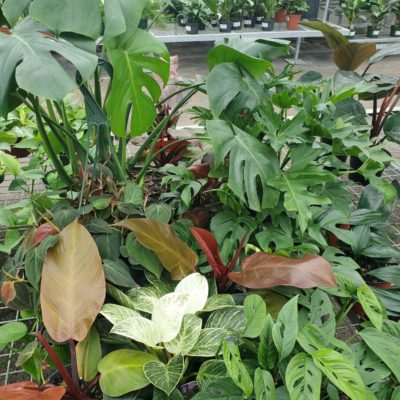
     No doubt about it, you just got to admire a plant that can handle anything from dark corners to bright sunrooms no matter its size or growth habit. And the fact that it’s one of the best tropical houseplants for cleaning the air makes it that much more desirable for the home and office. Whenever customers come into the greenhouse looking for an easy care/low maintenance houseplant and they’re not really sure what kind of sunlight it would get, one of our first suggestions is the Philodendron.

Of course, you don’t really need to take our word for how amazing this plant family is; just look on social media! There are thousands of plant enthusiasts and new home gardeners snapping photos of their giant Split Leaf/Monstera specimens, and showing off the green curtain they’ve achieved with a wall of trailing Philodendron varieties. And speaking of trailing varieties, you won’t believe the colour combinations out there! Not just solid green but tones of yellow, chartreuse, even orange and purple!

Whether you go for a small pot or hanging basket of trailing Philodendron or larger pots of Selloum, most varieties can handle any light location from low indirect light to high light, though they do best in medium light and prefer to have protection from long periods of direct sunlight. They all like to dry out slightly between deep waterings, and would appreciate getting a dose of all-purpose fertilizer every 4th watering. Along with the occasional foliage cleaning, that’s really all the care they require to be happy and healthy. When it comes to easy care houseplants, Philodendrons are some of the easiest available.

Still wondering which Philodendron is right for your space? Here are some of our favourites:


Low Growing / Trailing Varieties: Baby Hope, Birkin, Brasil, Lemon, Micans, Rhapidophora Tetrasperma, Silver Satin, Swiss Cheese.


Upright Varieties: Split Leaf/Monstera, Selloum, Moonlight, Rojo Congo.


Please note: not all varieties will be available at all times as our selection changes constantly and quickly.


Fun Facts about Philodendron!

  • They can be found in tropical forests of Central America and the West Indies.
  • Philodendrons are believed to have been discovered by European botanists and naturalists since 1644, but the name Philodendron wouldn’t be used as a means to classify this family until 1829 by Austrian botanist, Heinrich Wilhelm Schott.
  • There are nearly 500 species of Philodendron, which are then broken into nearly a dozen subspecies including Monstera and Rhapidophora Tetrasperma.
  • Some Philodendron species happily share their living space with ants. Up in the tropical canopies, the ants use the plants’ roots to help hold their nests together, while the plant absorbs nutrients from the nests and uses the ants as security against other insects.
  • Many trailing varieties are super easy to grow from cuttings! After trimming the tendrils, which also helps keep the plant full and bushy, take any cuttings that have at least 2 leaf nodes (where new leaves emerge from the stem) and place them cut-side down in potting soil. Water your cuttings lightly (they don’t have roots yet to suck up the moisture) and keep them evenly moist until they’ve rooted and are ready for transplanting.
Rudbeckia (2)

Fall – A Fantastic Time for Planting!

After these long, hot and dry days of summer, some of our gardens and planters may be looking a bit exhausted. Fall brings us shorter days, more frequent rainfalls (hopefully), and bearable temperatures for working in the flowerbeds. Now is the time to remove those pesky weeds, fill in some bare spots and replace those plants that just aren’t right. For your planters, consider adding some fall flowers like Ornamental Cabbage & Kale or Garden Mums. While these varieties are not hardy for our winters, they’ll last well into the fall and even handle some light frosts. 

Consider adding some varieties of perennials that are fall or even late-fall blooming to support your backyard pollinator friends (like bees, butterflies and hummingbirds) so they have enough food for the upcoming winter season. Here are just a few great options that come to mind:

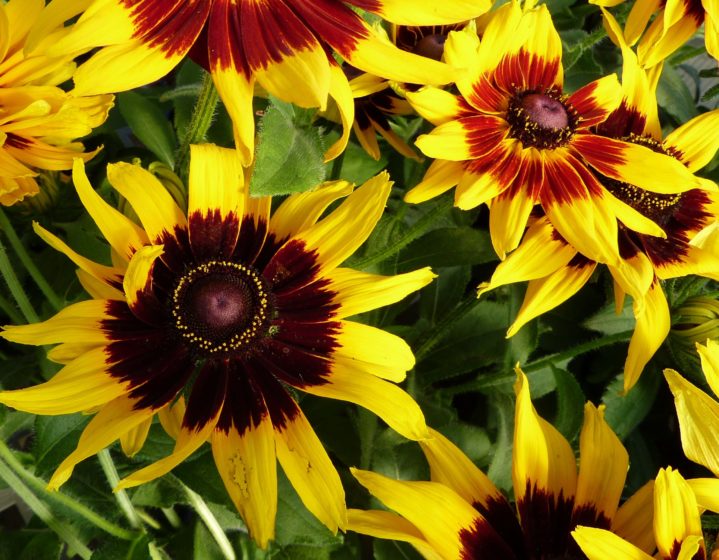
Sedum (Stonecrop), Aster (Michaelmas Daisy), Achillea (Yarrow), Agastache (Anise Hyssops), Rudbeckia (Black-Eyed Susan), Echinacea (Coneflower), Echinops (Globe Thistle), Monarda (Bee-balm), Prevorskia (Russian Sage), Ascelpias (Butterfly Weed), Eupatorium (Joe Pye Weed), Gaillardia (Blanket Flower), Helenium (Sneeze Weed), Helianthus (Perennial Sunflower), Heliopsis (False Sunflower), Calamintha (Catmint), Coreopsis (Tickseed), Salvia (Perennial Sage), and Lavendula (Lavender).

Browse through the Perennial Center to see what is blooming for inspiration OR I’m sure a wander through your neighborhood can also be a great inspiration!

Garlic is another fall task. Even though garlic can be planted in spring or fall, I find that when it’s planted in the fall it produces better heads with more intense flavour!‎ Start by picking a spot in your vegetable or herb garden, divide the head of garlic into cloves and plant them in a row about 3 inches deep. Harvest in mid to late summer and enjoy!


usediStock_84052277_XLARGE – Copy

Grow Your Own Cut Flowers!

What could be better than creating a stunning bouquet that you have grown yourself? Some of the most memorable bunches of flowers I have received are hand-picked by my children (true, at times they are mostly dandelions, but still!). My favourite hand-made bouquet has been a simple vase filled with Garlic Chives – they have white blooms that last for weeks!

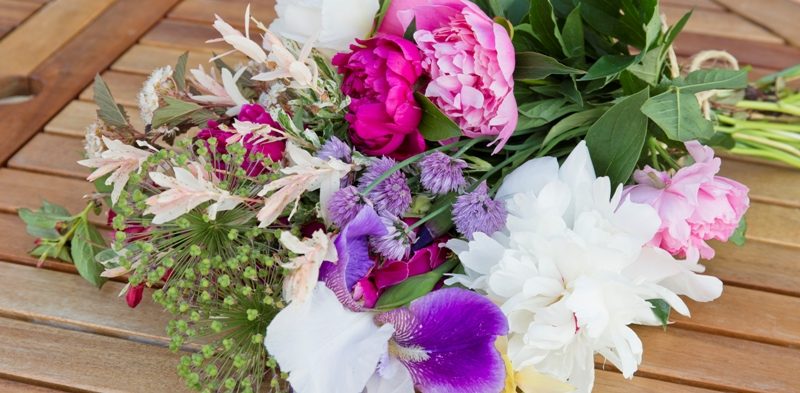
Use bold blossoms like Peonies and Iris or tall spiky flowers like Delphiniums, Veronica and Lavender, then use delicate flowers like Scabiosa or Lady’s Mantle to fill in or frame your centrepieces. Create designer masterpieces with “in season” flowers inspired by an afternoon in your garden.

Try different textures like Rosemary, Lady’s Mantle, and Celosia. Remember that some of the standard plants in your garden can help fill in your creations as well, like adding a few Hosta leaves for a bold foliage feel. Herbs are also a fun addition – beyond adding just flowers and greenery you will also be adding delicious aromas!

But the absolute best part of having a cut flower garden is that you can share it with everyone! A beautiful vase filled with a home-grown, handmade bouquet would make a spectacular hostess gift.

Steps and Tips:

The best time to cut your flowers is either before the morning dew has dried or in the early evening.

Cut above a node or leaf to let even more blooms grow for future bouquets.

Place stems in lukewarm water as soon as you cut them.

Prior to placing your cut flowers in their arrangements, cut their stems on a slight angle and place in a vase of warm water.

Change the vase’s water every few days.

Take time to enjoy them!

Man digging up vegetables on a garden, his legs and a spade in focus. Work concept

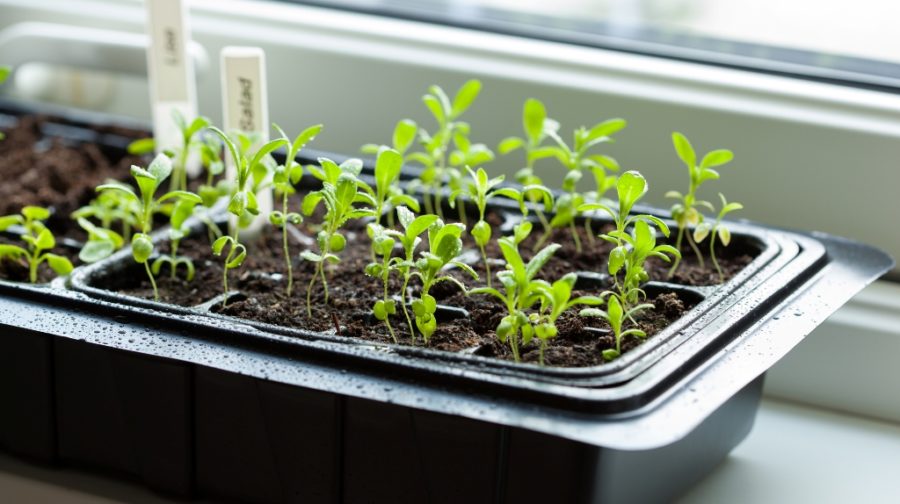
Seed Starting Part 5: Hardening Off and Planting Out

     Well, we’ve made it. It took a lot of hard work, planning, and table space, but we are finally ready to put all those adorable seedlings outside…almost. You’ve been so patient with them, they just need a little more time before they can grow big and strong outside (and you can reclaim your tables and shelves!).

Read More

USED -iStock-474877371 cropped

Seed Starting Part 4: Survival of the Fittest (Thinning)

Experienced gardeners know a simple truth: in order to have the best crop possible, you must choose which of your precious plants will live, and which have to be sacrificed for the greater good.

Okay, maybe that’s a little dramatic, but you’ve been watching these adorable seedlings grow for a few weeks and you may now find yourself, well, a bit attached to them. However, sometimes you must be cruel to be kind. After all, this is the main reason you seeded extras of your varieties, knowing that some wouldn’t germinate at all and others would have to be thinned from the crop. Plus, some of your taller varieties may need to be “potted up” into slightly larger pots, which means less space on your seeding station which means less plants so…*sigh* it must be done.

Read More

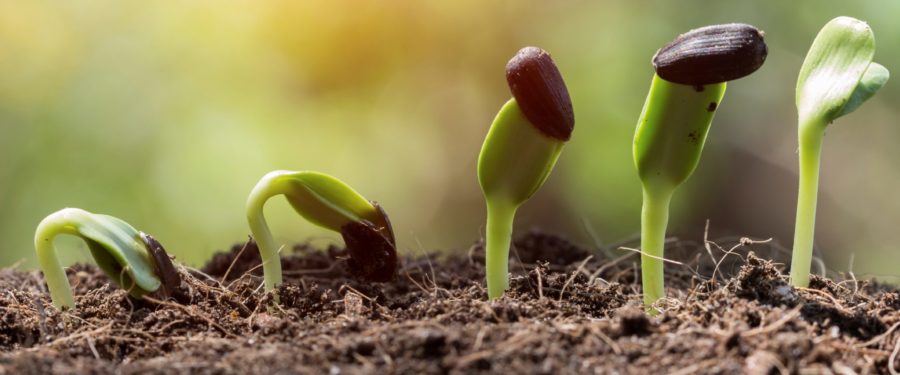
seed root on soil with sunbeam begining concept

Seed Starting Part 3: Planting, Finally! (10 Steps from Seed to Sprout)

At last! You have been so patient, getting all your supplies together, making sure you have the proper soil mix, and setting up your seeding station for all your future little sprouts. And now it’s time to put all that preparation to good use and get dirty!

Remember that mountain of information on your seed packets? Remember the all-important “Sowing/Start Indoors” date? No, no need to panic, you’ve still got plenty of time to double-check your dates. For vegetables, most of them want to be planted 4 – 8 weeks before the last frost, except for onions, leeks, and eggplants which take 10, and celery and celeriac prefer 12 weeks of cozy indoor growing. Flowering plants, both annual and perennial varieties, can vary but usually hit that 4 – 8 week window, as well.

Oh, one more thing! If you’ve got specific numbers in mind as to how many of each plant you want to end up with, make sure you sow a few extra of each variety just in case. This goes back to that tricky germination rate; some seeds just don’t take very well, no matter what you do to coax them out of hiding. So it’s better to have extra and then thin out the weaker ones later to get the best plants, but more on that in Part 4!

Ready to sow? Then let’s go!

Read More

Picture1

Belgian’s Cactus Gardens

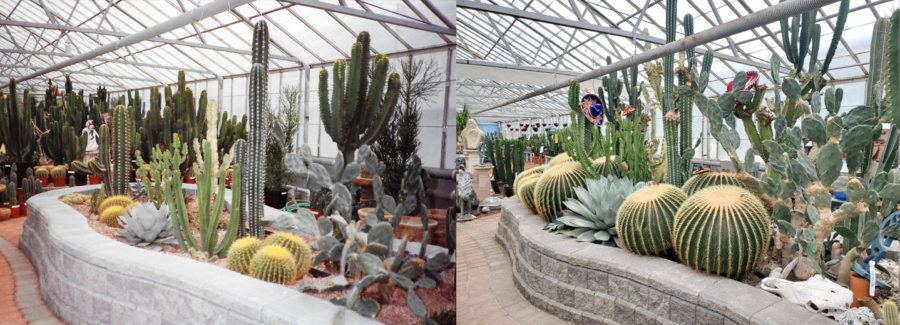
No visit to Belgian Nursery is complete without exploring our Cactus & Succulent House. The 5,400 sq. ft. greenhouse, which had previously been used to grow geraniums, has been filled with cacti, succulents, aloe, agave, and other desert dwellers since the 1990s! It’s been a source of pride for all of us, especially owners Rosie and Luc without whom this desert oasis would never have existed. Read More

Hand holding rooting succulent propagation

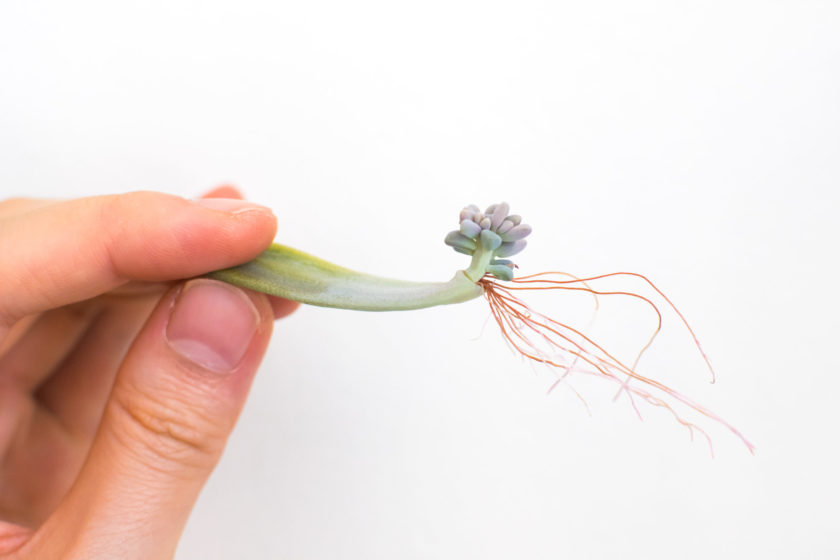
Propagating (and Reviving) Succulents

We are of the opinion that there is no such thing as having too many succulents, as you can clearly see from our Cactus & Succulent House. They’re adorable, they thrive on near-criminal neglect, and best of all they are ridiculously easy to propagate! All you need is a pair of sharp, clean scissors and some newspaper and your collection can expand beyond your wildest dreams!

Before you dive into the propagating steps below, here’s a helpful hint for most trailing succulents, especially the popular Burro’s Tail: Make sure your plant is DRY before cutting! We’re talking bone-dry, to the point of soil breaking away from the pot DRY. The plant is more likely to have a death-grip on its leaves in this state, which means you can end up with something more than just a bare stick.

Read More

Palnting pots

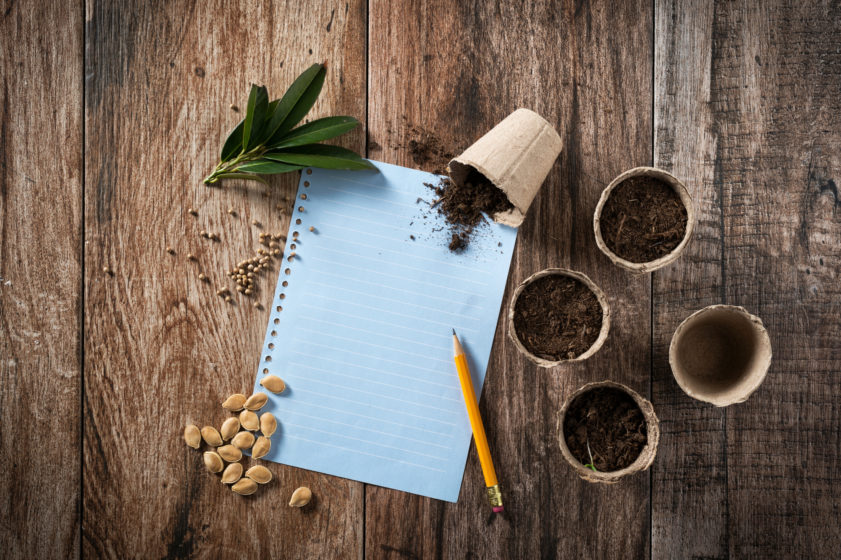
Seed Starting Part 2: Timing Is Everything

So, you’ve got your seeding station all set up, all your containers are washed and sterilized, and you’ve memorized the seed catalogue. Time to start seeding, right? Well, not quite yet.

Yes, it’s true that winter and early spring is a great time to start your seeds indoors, but it really depends on the varieties you’ve chosen. Some vegetables like peppers, tomatoes, and most members of the brassica family (broccoli, cauliflower, kale, etc.) need the extra few weeks indoors to get a head start on the season.

Read More

iStock-694037230 – Copy

Seed Starting Part 1: Materials & Ingredients

You look outside and everything’s cold and snowy, and you get excited because it’s almost Indoor Seeding time! Starting your seeds indoors is cost-effective and gives you more control over what products are used on your plants – perfect for anyone looking to make their garden pesticide-free.

     But let’s not get too ahead of ourselves, which is very easy to do right now (these cold, grey days are just begging for a burst of green!) Seeding is like trying a new recipe: we have to get the right materials, check the ingredients list, and follow the steps in the right order if we want to enjoy a delicious treat or, in this case, healthy new plants. So let’s start with Part 1: Materials & Ingredients.

Read More

20210106_140623Cropped

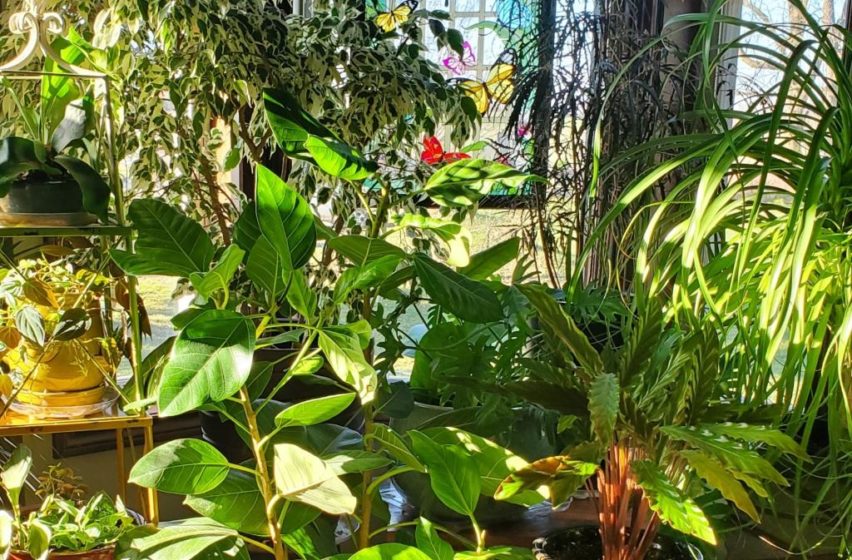
For the Love of Plants – Houseplants, That Is!

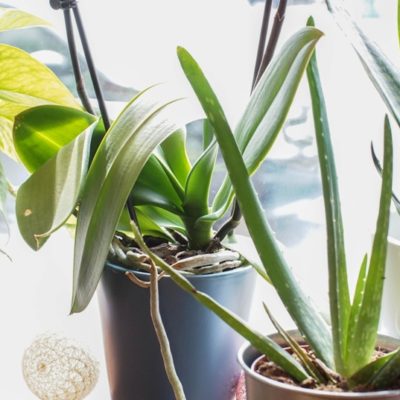
The trend of having tropical houseplants in the home and office has grown exponentially over the years, and we’re not all that surprised! Who could say “no” to the beauty of an Orchid, the incredible arching foliage of a ZZ Plant, or any of the health benefits that come with caring for indoor houseplants?

     But now it’s winter, and some of our tropical friends might not be looking as lush and lively as they did just a few months ago. We like to call this “having tropical houseplants during a Canadian winter” and the upside is that you’re not alone in your concerns. We’ve all gone from getting 15+ hours of bright, gorgeous sunlight in summer down to, well, not quite 0 but the few hours of sun we do get is considerably weaker. What does all of this mean for our plants? Simply put:

Less Sunlight = Less Energy Consumed = Less Growth = Less Frequent Watering

     Tropicals will slow down in the lower light of winter, but won’t go fully dormant like the perennials out in the gardens. And along with less sunlight, houseplants also have changes with indoor temperatures and humidity levels to deal with – the use of baseboard heaters or furnaces may help keep us warm, but they also lower humidity levels. So what can we do to help our foliage friends get through to the light and warmth of spring and summer?

Read More

croppediStock-1277579932 – Copy

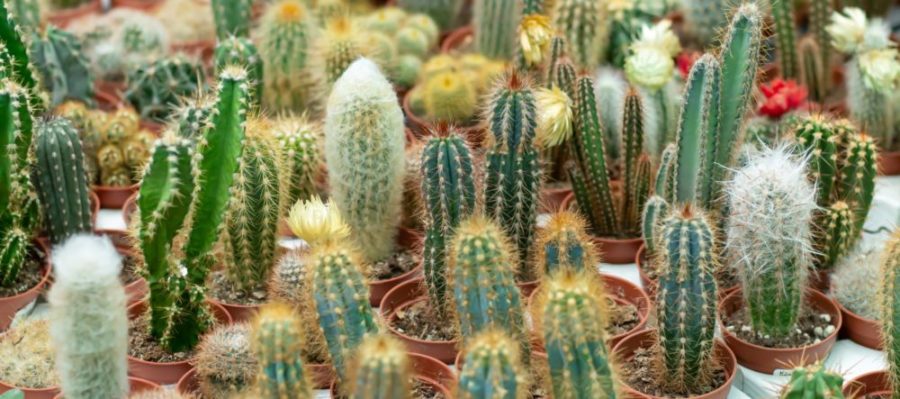
Cacti and Succulents: Prickly Plants and their Not-So-Prickly Friends

Cacti and Succulents have been very trendy for years now, and no wonder! They ask for so little and yet offer us so much through their amazing array of shapes, sizes, colours, and even style of spines (those prickly things that make a cactus, well, a cactus). There are thousands of species and varieties in existence, and while we here at Belgian would love to have one of each to call our very own, even our 5,400 sq. ft. Cactus & Succulent House isn’t big enough to hold all of them! Even so, we are able to showcase many, many varieties in our selection of individual pots and dish gardens, as well as in our display gardens.

Read More

Blog – our top 4 tips

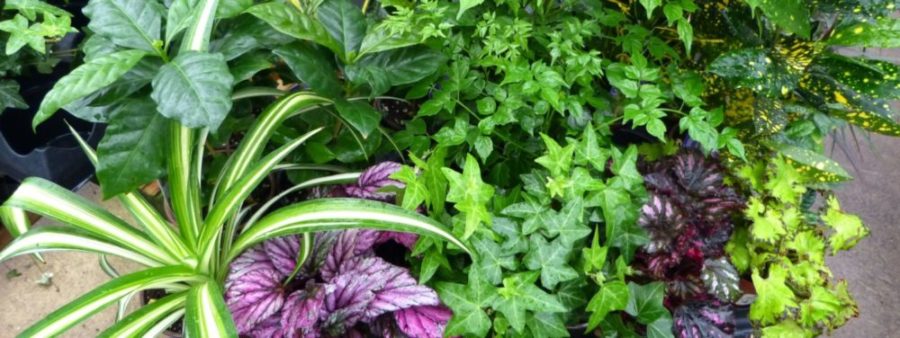
Our Top 4 Tips for Terrific Tropical Houseplants

1. Let your plants tell YOU when they need water. Monitor its soil moisture and water when needed, rather than falling back on the old standard of watering once a week. Watering will vary as the seasons change (more often in summer, less often in winter). Read More

Blog – growing perennials in

Growing Perennials in Pots & Planters

It’s no secret that there are lots of benefits to container gardening. Growing perennials in pots & planters is a new idea to some gardeners, but it is a great way to change up your containers and add some new ideas. And with the right care, perennials in containers can be overwintered and grown again the following year! Here are a couple of things that you should always keep in mind when planning potential perennial planters: Read More

P1080646

Clean Air Plants

It’s no secret that there are lots of benefits to having plants in your home. Not only do they look great, but many houseplants can make your home a healthier place to live! In 1989, a NASA study found that common indoor plants naturally purify the air in your home by removing harmful toxins such as formaldehyde (which are found in carpets, upholstery, glues, paint and more), benzene (plastics, synthetic fibers, rubber), and trichloroethylene (in paint removers, rug cleaning solution, adhesives, etc.). Read More

Copyrights © 2025 Belgian Nursery All Rights Reserved.       powered by Digital North.

X